
Taiwan famous dishes: stir-fries rice noodle
-
Hsinchu Rice Noodles: A Buyer’s Guide to Taiwan’s Thin Rice Vermicelli
If you’ve eaten Taiwanese fried rice noodles at a night market, a family banquet, or a Taiwanese restaurant abroad, you’ve almost certainly eaten Hsinchu rice noodles. They’re the fine, springy strands that soak up soy sauce, shallots and pork without turning to mush. For importers, distributors and private-label buyers, they’re also one of the easiest Asian noodle SKUs to sell: naturally gluten-free, quick to cook, and versatile.
What are Hsinchu rice noodles?
In Taiwan this style is called cui fen (炊粉), “steamed rice noodles,” or you mi fen (幼米粉), “fine rice noodles.” The craft came to Taiwan from Fujian. It took root in Hsinchu, a city on the island’s northwest coast, for a practical reason: wind. Hsinchu’s strong, steady winds dry freshly made noodles quickly and evenly, which gives them a clean texture. Over time the city became Taiwan’s rice-noodle capital, and “Hsinchu” on a pack still tells shoppers exactly what style they’re buying.
How cui fen compares with other noodles
- vs. thick rice sticks (pad thai style): much thinner, with a softer bite, and ready in a fraction of the time.
- vs. glass noodles: made from rice rather than mung bean or other starches. Cui fen is opaque white and absorbs sauce. Glass noodles turn translucent and stay slippery.
- vs. wheat angel hair: a similar fine strand but with no wheat, so it fits gluten-free menus.
How to cook Hsinchu rice noodles
The signature dish is Taiwanese stir-fried rice noodles (炒米粉). Soften the noodles briefly in hot water until pliable, then drain. A few minutes is usually enough, but follow the pack directions. Stir-fry shallots, shredded pork, dried shrimp, shiitake, cabbage and carrot, then add stock and soy sauce. Toss in the noodles and keep turning until they’ve absorbed the liquid.
They also work in clear noodle soups, spring-roll fillings and cold noodle salads. That gives retailers plenty of recipe content for shelf talkers and product pages.
Why buyers stock them
Gluten-free demand. Shoppers who avoid wheat are actively looking for noodle options. A rice noodle with a clear gluten-free label answers that search directly.
Easy to store and ship. Dried noodles keep at room temperature and weigh little for the number of servings they deliver. That keeps freight and warehousing simple.
Two audiences in one SKU. Taiwanese, Chinese and Southeast Asian shoppers recognize the product instantly. Mainstream shoppers see a quick weeknight noodle that cooks faster than pasta.
Kitchen performance. For foodservice and food processors, thin rice vermicelli holds its texture in batch stir-fries and doesn’t clump the way softer noodles can.
What to check when sourcing rice vermicelli
Not every product sold as rice vermicelli is the same. Before you list a new supplier, ask for three things. First, the ingredient list, so you know whether the noodle is pure rice or a rice-and-starch blend. That affects texture as well as how you can label it. Second, documentation that supports a gluten-free claim in your market. Third, a full spec sheet covering pack sizes, carton configuration and shelf life, so your team can plan pricing and replenishment from day one.
Sourcing Hsinchu rice noodles from Sunright
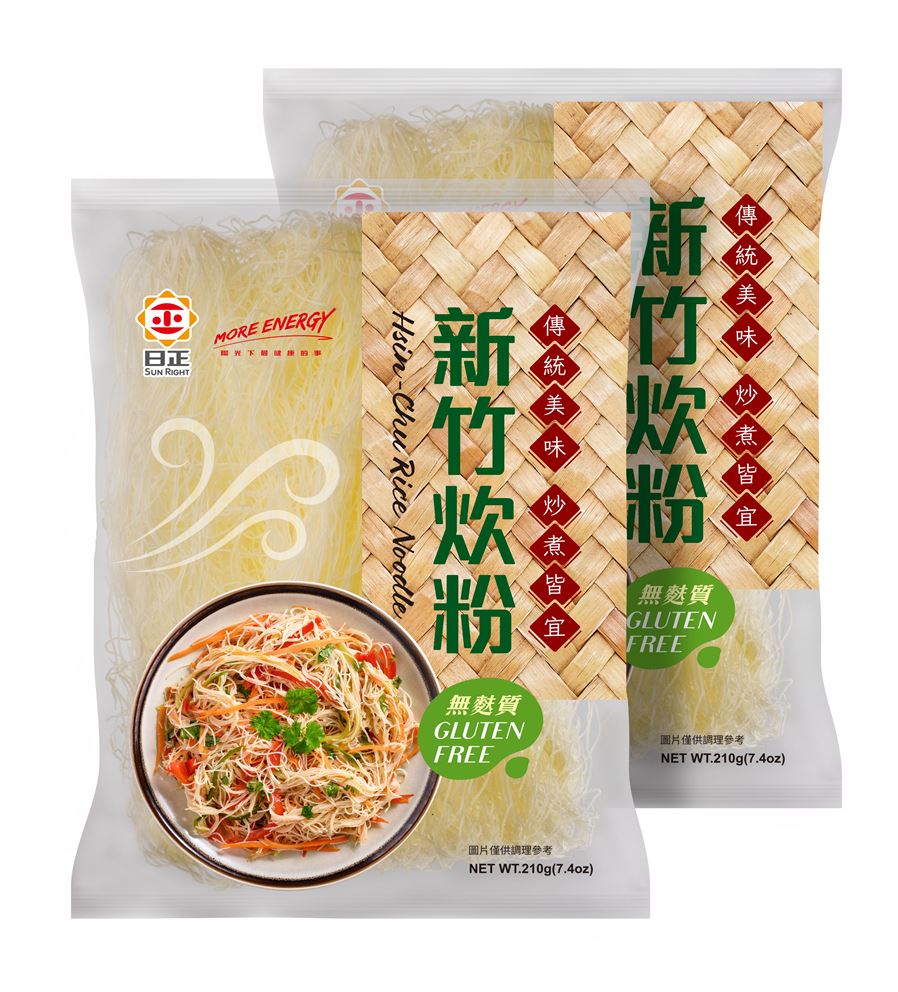
Sun Right Foods (日正食品) has been making noodles in Taiwan since 1975 and specializes in rice vermicelli and glass noodles. Our Sunright Chinese Hsin-Chu Rice Noodle is a gluten-free thin rice vermicelli made in the traditional Hsinchu style. We supply it to importers, Asian food distributors and supermarket buyers in Europe, North America, Australia and across Asia.
We supply under the Sunright brand and are happy to work through your market’s labeling and packaging requirements.
Want to see if it fits your range? Send us your target market and expected volume, and we’ll reply with a spec sheet and sample options.
